
When is Diwali 2026? The Science Behind the Shifting Festival Dates
Ever tried explaining to your grandma why the Diwali festival shifts dates every year while New Year’s Day stays put? Or wondered why your Hindu calendar says it’s Kartik Maas while your phone screams November? Buckle up, because we’re diving into the cosmic chaos of the English (Gregorian) vs. Hindi (Hindu/Vikram Samvat) calendars—where math meets mythology, and astronomy parties with tradition for calendar 2026.
The Basics: Solar vs. Lunar Showdown
English Calendar (Gregorian) – The Sun’s Strict Schedule
- Solar-Based: Follows Earth’s 365.24-day trip around the Sun.
- Fixed Months: January to December, with rigid 30/31-day lengths (except February, the oddball with 28).
- Leap Year Fix: Adds a day every 4 years to sync with solar reality.
Hindu Calendar Months (Vikram Samvat/Panchang) – The Moon’s Mood Swings
- Lunisolar: Mixes Moon cycles (lunar months) with Sun adjustments (solar years).
- Flexible Months: Chaitra, Vaishakh, Jyeshtha… each starts with a new moon (Amavasya).
- Adhik Maas (Extra Month): Since lunar years (~354 days) fall short, an extra month pops in every ~3 years to realign with the Sun.
Fun Fact: The Gregorian calendar is like a Swiss watch; the Hindu Calendar is like a jazz musician—structured but improvising.
The Year Zero Dilemma: Why Start Dates Matter
English Calendar – All About Jesus
- Epoch: Starts at 1 CE (supposedly Jesus’ birth year).
- Global Standard: Used for business, science, and memes.
Hindi Calendar – Kings and Cosmic Cycles
- Vikram Samvat Calendar (57 BCE): Legend says King Vikramaditya kicked off this era after defeating the Shakas.
- Shaka Samvat (78 CE): Another popular Indian calendar, used alongside Vikram Samvat.
- Kali Yuga (3102 BCE): Some traditional systems track time since this mythological epoch.
Tech Twist: While computers run on Unix time (seconds since 1970), Hindu astrology tracks Tithis (lunar phases) and Nakshatras (constellations).
English & Indian Calendar Months & Festivals: Why Dates Play Hide & Seek
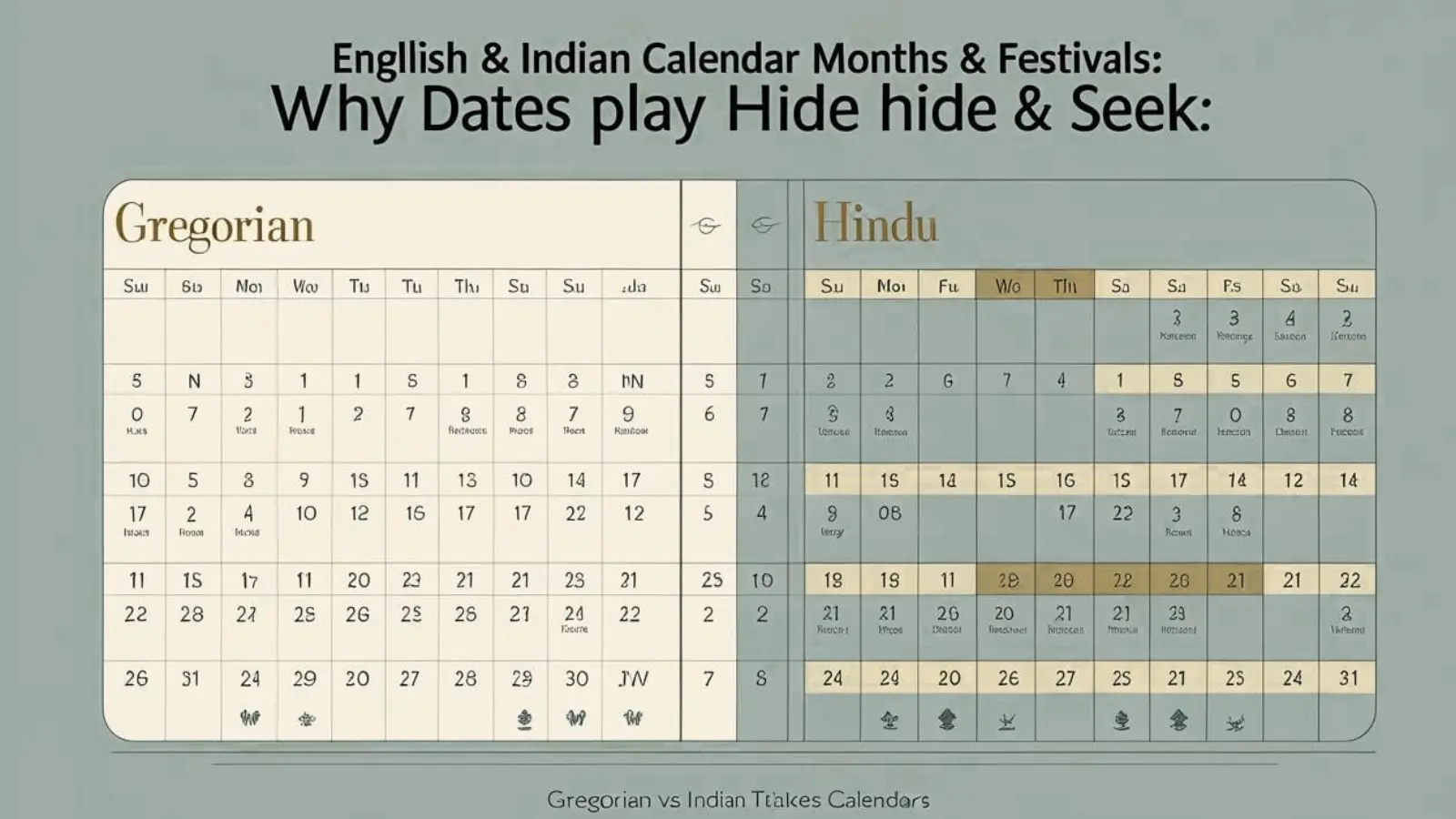
Gregorian’s Predictable Parties
- New Year: Always Jan 1.
- Christmas: Always Dec 25.
- Your birthday? Same date every year (unless you’re a leap-day baby).
Hindu Calendar Moving Celebrations
- Diwali: Changes yearly (Oct/Nov) since it’s on Kartik Amavasya.
- Holi: Depends on Phalguna Purnima.
- Navratri: Starts after the new moon in Ashwin.
Science Behind It: The Moon orbits Earth in ~29.5 days, making lunar months shorter than solar ones. Hence, Hindu festivals drift in the Gregorian calendar.
Converting Calendars: The Math No One Signed Up For
Gregorian to Hindu (Vikram Samvat)
- Step 1: Subtract 57 (since Vikram Samvat starts 57 BCE).
- Example: 2024 Gregorian = 2024 + 57 = 2081 Vikram Samvat.
- Step 2: Adjust for the lunar month (requires Panchang calculations).
Hindu to Gregorian
- Step 1: Add 57 to Vikram Samvat year.
- Example: 2081 Vikram Samvat = 2081 – 57 = 2024 Gregorian.
- Step 2: Check the Tithi (lunar day) to pinpoint the exact date.
Pro Tip: Use apps or Panchang tables—manual calculations involve trigonometry-level patience.
The 12 Hindu Months (Vikram Samvat) with English & Gregorian Equivalents
| Hindu Month | English Equivalent | Gregorian Timing (Approx.) | Key Festivals |
| 1. Chaitra | March–April | 22 Mar – 20 Apr | Chaitra Navratri, Ram Navami |
| 2. Vaishakh | April–May | 21 Apr – 21 May | Akshaya Tritiya, Buddha Purnima |
| 3. Jyeshtha | May–June | 22 May – 21 Jun | Vat Savitri, Ganga Dussehra |
| 4. Ashadha | June–July | 22 Jun – 22 Jul | Rath Yatra, Guru Purnima |
| 5. Shravana | July–August | 23 Jul – 22 Aug | Raksha Bandhan, Janmashtami |
| 6. Bhadrapada | August–September | 23 Aug – 22 Sep | Ganesh Chaturthi, Pitru Paksha |
| 7. Ashwin | September–October | 23 Sep – 22 Oct | Navratri, Durga Puja, Dussehra |
| 8. Kartik | October–November | 23 Oct – 21 Nov | Diwali, Kartik Purnima |
| 9. Margashirsha | November–December | 22 Nov – 21 Dec | Gita Jayanti, Dhanurmas |
| 10. Pausha | December–January | 22 Dec – 20 Jan | Makar Sankranti Prep |
| 11. Magha | January–February | 21 Jan – 19 Feb | Makar Sankranti, Vasant Panchami |
| 12. Phalguna | February–March | 20 Feb – 21 Mar | Holi, Maha Shivaratri |
Diwali Celebration: The Festival of Lights – A Cross-Calendar Celebration
About Diwali in the Hindu Calendar (Lunisolar System)
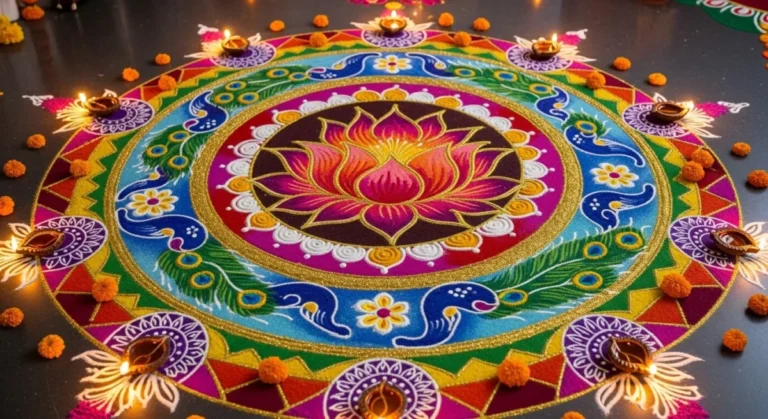
Diwali/ dipawali is celebrated on Kartik Amavasya (the new moon day in the Hindu month of Kartik). Since the Hindu calendar is lunisolar, Diwali’s date shifts annually in the Gregorian calendar, typically falling between mid-October to mid-November. The festival spans five days, starting with Dhanteras and ending with Bhai Dooj, each day tied to specific rituals and mythological events (e.g., Lord Rama’s return to Ayodhya).
Diwali in the English Calendar (Gregorian System)
In the Gregorian (English) calendar, Diwali (aka deepavali) is a floating holiday due to its lunar dependency. For example:
- 2024: October 31 (Thursday)
- 2025: October 20 (Monday)
- 2026: November 8 (Sunday)
Governments and businesses in India (and globally) list Diwali dates yearly, blending the Hindu calendar’s tradition with the Gregorian system’s practicality.
Dipawali 2026 Date: English & Hindu Calendar Alignment
Gregorian (English) Calendar:
📅 Sunday, November 8, 2026
(Marked as a public holiday in India, Nepal, and globally)
Hindu (Vikram Samvat) Calendar:
📜 Kartik Amavasya, Vikram Samvat 2083
(Begins at sunset on Nov 7, ends Nov 8 evening – exact timings vary by location)
Final Verdict: Who Wins?
- Gregorian: Great for global sync, tech, and deadlines.
- Hindu Calendar: Perfect for astrology, hindu festival, and cosmic harmony.
So if someone asks why Makar Sankranti is fixed (solar) but Eid floats (lunar) in calendar 2026 or years further on, hit them with these facts. Because calendars aren’t just dates—they’re time-traveling cultural code.